Should You Avoid Phytoestrogens with Breast Cancer? What the Research Really Says
If you’ve been warned to avoid soy and other phytoestrogen-rich foods, here’s what the latest research really reveals.

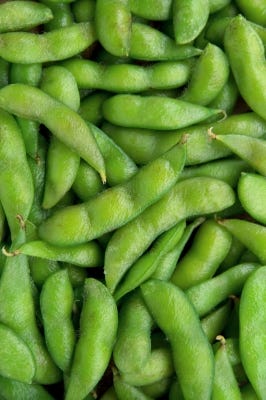
Phytoestrogens have to be one of the most misunderstood plant compounds on the planet. For years, phytoestrogens have been caught in the crossfire of breast cancer discussions - praised by some, scorned by others.
Women come to me all the time and tell me that their doctor or nutritionist told them that since they have estrogen-driven breast cancer (it shows up as ER+ on your pathology report) they need to stay away from any food that contains phytoestrogens and specifically single out soy and flaxseed.
For a couple of types of breast cancer, that might be true (and I emphasize the word “might”) - I’ll tell you more about that later. But for everyone else, IT SIMPLY ISN’T TRUE.
Because phytoestrogens can weakly mimic estrogen in the body, it’s often assumed they should be avoided, especially for those with estrogen receptor-positive breast cancer. But science is rarely that black and white and, in fact, growing evidence suggests that these compounds may not only be safe, but potentially protective.
When we look at real-world evidence, this becomes even more reassuring. In countries where phytoestrogen-rich foods like soy, legumes, and flaxseeds are regularly consumed, breast cancer rates tend to be significantly lower. Even more importantly, studies have shown that women who consume these foods after a breast cancer diagnosis often have better outcomes and lower recurrence rates. While no single food is a magic solution, this pattern is difficult to ignore - and it challenges the idea that phytoestrogens should be avoided.
What Exactly Is A Phytoestrogen?
The word phytoestrogen means “plant estrogen” and it is a group of chemicals found in plants. Their chemical structure allows them to mimic the human hormone estrogen. Hence the controversy.
Here’s How Phytoestrogens Really Work
Here’s where things get interesting: phytoestrogens don’t act the same way as your body’s own estrogen. They’re much weaker, and in many cases, they can actually take up space on estrogen receptors without strongly activating them. Think of them less as “adding fuel to the fire” and more as gently dialing things down. This is one of the reasons researchers are now looking at them as potentially protective, rather than harmful.
When you eat phytoestrogen-rich foods, they enter the body and dock with cells that have estrogen receptor sites on them. To our best knowledge, there are two different estrogen receptors, alpha and beta.
ER-alpha is known to promote proliferation (rapid growth) of breast cells. ER-beta opposes that action.
According to studies, phytoestrogens have a higher affinity for docking with ER-beta. [1], [2] Once docked, a phytoestrogen either acts similarly to the body’s own estrogen, or it acts as an estrogen antagonist (meaning it opposes the action of the body’s own estrogen).
Whether a phytoestrogen acts as an estrogen or an antiestrogen seems to depend on the amount of circulating estrogen that is already present in the body, as well as the number and type of estrogen receptors in that body.
Phytoestrogens may be considered Selective Estrogen Receptor Modulators (or SERMs) [3], [4], [5]. An example of a well-known SERM is the drug Tamoxifen, used for ER+ breast cancer.
The Research on Phytoestrogens and Breast Cancer
A 2009 study on soy [6] found that women who regularly consumed soy products such as soy milk, edamame or tofu had a 32% lower risk of their breast cancer returning and a 29% decreased risk of death, compared with women who consumed little or no soy.
A 2013 study on flaxseed and its lignans [7] found that they increased the effectiveness of Tamoxifen and Herceptin.
A 2013 study on soy [8] concluded with this statement by the authors:
“Soy consumption may be associated with reduced risk of breast cancer incidence, recurrence, and mortality. Soy does not have estrogenic effects in humans. Soy intake consistent with a traditional Japanese diet appears safe for breast cancer survivors. While there is no clear evidence of harm, better evidence confirming safety is required before use of high dose (≥100mg) isoflavones can be recommended for breast cancer patients.”
A systematic review of studies investigating flaxseed and breast cancer, reported in 2014 [9] found that just 25 grams of flaxseed (about 4 tablespoons of ground seed) per day:
• decreased hot flashes
• improved breast density
• had anti-cancer activity
• decreased the risk of breast cancer
• improved mental health
• lowered mortality rates among breast cancer patients
• significantly slowed down the rate of cells multiplying in breast tissue of people who were at a higher risk for breast cancer
A 2022 meta-analysis [10] found that soy isoflavones had a protective effect - that a higher intake of soy isoflavones was linked to a lower risk of developing breast cancer in both pre- and postmenopausal women.
A 2023 meta-analysis [11] reported by researchers in Denmark, Norway, Australia, and England examined the impact of dietary intake of specific foods on breast cancer recurrence and mortality. The foods investigated were:
• soybeans and isoflavones
• lignans and their breakdown product, enterolactone (these are plant compounds from a wide variety of plants including seeds - especially flaxseed - nuts, legumes, whole grains, fruit and vegetables)
• cruciferous veggies
• green tea
Here’s what they found (and I’ll keep this just about the phytoestrogens, the subject of this article):
Soy isoflavones were associated with a 26% reduced risk of breast cancer recurrence, especially amongst post-menopausal survivors. The effect of soy consumption on risk of mortality was smaller at 12% and was seen mostly at 20-40 mg per day, or one to two servings.
Enterolactone, a compound metabolized from lignans, was found to reduce the risk of breast cancer-specific mortality by 28%. Enterolactone also reduced the risk of death from any cause by 31%, and particularly in post-menopausal women.
The study authors concluded “Soy, enterolactone, and green tea demonstrated significant risk reductions in outcomes following breast cancer.” [11]
A 2024 prospective study by Korean researchers [12] included 592 breast cancer survivors. The study confirmed that dietary isoflavones were associated with a more favorable prognosis in breast cancer survivors.
A 2025 review of studies [13] found there was no evidence that soy isoflavones interfered with treatments like tamoxifen or aromatase inhibitors. In fact, there was a continued indication of reduced recurrence rates and possibly mortality.
Are Phytoestrogens Beneficial For Triple Negative Breast Cancer?
The cells of someone diagnosed with triple negative breast cancer (TNBC) lack estrogen receptors, and I’m often asked whether phytoestrogens would make any difference for this type of breast cancer. At present the studies appear to be primarily cell studies and studies on phytoestrogens combined with drug therapies. I did not see any studies on phytoestrogens alone for women with TNBC.
A preliminary cell study reported in 2015 [14] found that when phytoestrogens (namely enterolactone) were added to invasive triple negative breast cancer cells, there was a decrease in cell proliferation (rapid growth).
Another preliminary cell study reported in 2018 [15] had similar findings, only they investigated soy.
A 2025 review of medical studies [16] showed that phytoestrogens could be beneficial for TNBC because they worked synergistically with conventional cancer drugs and radiotherapy, reversed drug resistance, and improved drug uptake.
Are Phytoestrogens Beneficial for HER2+ Breast Cancer?
Remember earlier when I said there were a couple of types of breast cancer that MIGHT not benefit from phytoestrogens? Here’s what I found out about that.
For women with HER2+ tumors, a very small 2015 study [17], found that eating soy could be associated with an increased rate of recurrence. Now it’s important to keep in mind that this study only included 339 women – 25 of whom had a breast cancer recurrence, and only eight of the 25 had HER2+ tumors.
A 2015 review of medical studies [18] also found that dietary soy intake was associated with an increased rate of recurrence in women whose tumors were HER-2 positive.
So that might be a NO on soy for those with HER2+ tumors. On the other hand, flaxseed has been found to decrease over-expression of the HER2 gene [19].
Flaxseed has also been shown to increase the effectiveness of Herceptin, a targeted drug given to those with HER2+ breast cancer [20].
Should Women on Hormone Blocking Medication Avoid Phytoestrogens?
A 2010 clinical trial [21] involving over 500 breast cancer patients found that there was a benefit for women taking the aromatase inhibitor Anastrazole and eating soy. Study authors stated “In the study reported here, high intake of soy isoflavones reduced the risk of recurrence among patients receiving Anastrozole treatment. This effect might be due to the synergistic inhibitory effects of isoflavones and anastrozole on the synthesis of estrogen.”
An earlier animal study [22] examined the effects of flaxseed and Tamoxifen – alone and in combination – for mice with ER+ breast cancer. Researchers found that the combination of flaxseed and Tamoxifen inhibited tumor size more than 53%, as compared with Tamoxifen on its own.
A 2014 review of studies [7] including in vitro, animal, observational, and clinical studies on flaxseed and its lignan and oil components found that flaxseed increased the effectiveness of Tamoxifen.
I read several such studies, all of which indicated that the combination of flaxseed and Tamoxifen worked better than either on its own at inhibiting breast cancer tumor size, growth and spread.
Phytoestrogens Might Not Help Premenopausal Women at High Risk for Breast Cancer
The other group that might not benefit from soy phytoestrogens in particular is premenopausal women deemed to be at high risk for breast cancer.
A small 2012 clinical study [23] found that for this category of women, taking soy isoflavones appeared to increase the growth of breast cells. To be fair, the study did not use whole soy foods – instead they were using more concentrated components from soy – including genistein, daidzein, and glycitein, which is not generally how we take them, although genistein supplements are available. One wonders if they would have found the same results had they been using whole organic soy foods.
While the 2012 study at [23] suggested that soy isoflavone supplementation (150 mg/day) might increase breast cell proliferation in high-risk premenopausal women, subsequent research has shown that consuming soy as food (tofu, soy milk, edamame) does not appear to be harmful, and high intake is associated with a reduced risk of premenopausal breast cancer, particularly in Asian populations. The potential risk seems specific to high-dose purified supplements rather than traditional food sources.
Some studies found that isoflavone supplements may slightly increase breast tissue density in premenopausal women (a marker of risk), while having no effect or reducing it in postmenopausal women.
What is a Safe and Effective Dose?
Soy Isoflavones:
The study at [11] showed the greatest risk reduction for soy isoflavones was observed at 60 milligrams per day. This is equal to 2-3 servings per day (1 serving equates to 1 cup of soy milk, 3 ounces of tofu or a half-cup of cooked soybeans).
Lignans:
For lignans, it’s a bit more difficult to calculate the effective dose because lignans come from a variety of foods and because the gut microbiome varies so much among individuals. We must then rely upon experience. I recommend that my clients have between 1-3 tablespoons of freshly ground flaxseed per day (start at 1, work up to 3) to gain the benefits of flaxseed’s lignans.
In the list that appears below, you will see that there are a great many other foods that contain phytoestrogens (who would have suspected carrots?) but we do not have reliable data on dosages for most of those listed foods/herbs.
The Importance of Avoiding Highly Processed Phytoestrogens
Since highly processed and concentrated phytoestrogens may have different effects on breast tumor cells, it is best to avoid highly processed soy, and especially something called soy protein isolate (read your labels!). Soy protein isolate is a known breast cancer risk [24]. This is sometimes found in protein powders and other processed foods.
And please always choose organic soy, when you eat soy, and here’s why. Back in the late 1990’s, only 8% of soy was genetically modified. As of 2025, 94-96% of the soy in the US is genetically modified.
Rich Sources of Phytoestrogens
Choose organic wherever you can!
Alfalfa
Apples
Barley
Carrots
Chickpeas
Coffee
Edamame
Flaxseed
Garlic
Hops (so yes, that includes beer)
Lentils
Licorice Root
Miso
Oats
Pomegranates
Red Clover
Rye
Sesame Seeds
Soybeans
Soynuts
Soy milk
Sunflower Seeds
Tempeh
Thyme
Tofu
Turmeric
Wheat germ
Yams
When it comes to healing, fear-based decisions rarely serve us well. The cautions against phytoestrogens are a perfect example of how easily we can be led astray, leaving women feeling confused about what’s truly safe. But as research continues to evolve, it’s becoming increasingly clear that many long-held beliefs simply don’t hold up under closer scrutiny.
The more you understand how your body actually works, the more that fear begins to soften - and your choices become clearer, calmer, and more confident. You don’t have to navigate this alone. If you’re feeling unsure about what to eat, what to avoid, or how to support your body moving forward, this is exactly the kind of work I help women with.
If you’d like personalized, grounded support on your healing journey, you can learn more about working with me here.
References:
[1] Phytoestrogen-mediated modulation of estrogen receptors: elucidating the binding interactions and pharmacokinetic profiles in breast cancer treatment – https://www.researchgate.net/publication/399786368_Phytoestrogen-mediated_modulation_of_estrogen_receptors_elucidating_the_binding_interactions_and_pharmacokinetic_profiles_in_breast_cancer_treatment
[2] Interaction of Coumarin Phytoestrogens with ERα and ERβ: A Molecular Dynamics Simulation Study – https://www.mdpi.com/1420-3049/25/5/1165
[3] Phytoestrogens: the “natural” selective estrogen receptor modulators? – https://www.sciencedirect.com/science/article/abs/pii/S0301211598002814
[4] Selective Estrogen Receptor Modulators and Phytoestrogens – https://pmc.ncbi.nlm.nih.gov/articles/PMC2587438/
[5] Estrogen Receptor β-Selective Transcriptional Activity and Recruitment of Coregulators by Phytoestrogens – https://www.jbc.org/article/S0021-9258%2819%2931710-7/fulltext
[6] Soy food intake and breast cancer survival – https://www.ncbi.nlm.nih.gov/pmc/articles/PMC2874068/
[7] Flaxseed and its lignan and oil components: can they play a role in reducing the risk of and improving the treatment of breast cancer? – https://www.ncbi.nlm.nih.gov/pubmed/24869971
[8] Soy, red clover, and isoflavones and breast cancer: a systematic review – https://www.ncbi.nlm.nih.gov/pmc/articles/PMC3842968/
[9] Flax and Breast Cancer: A Systematic Review – https://www.ncbi.nlm.nih.gov/pubmed/24013641
[10] Soy Isoflavones and Breast Cancer Risk: A Meta-analysis – https://pmc.ncbi.nlm.nih.gov/articles/PMC8931889/
[11] Phytonutrients and outcomes following breast cancer: a systematic review and meta-analysis of observational studies – https://academic.oup.com/jncics/article/8/1/pkad104/7468128
[12] Dietary Isoflavone Intake and Breast Cancer Prognosis: A Prospective Analysis and Meta-Analysis – https://pubmed.ncbi.nlm.nih.gov/37943034/
[13] A Review of the Clinical and Epidemiologic Evidence Relevant to the Impact of Postdiagnosis Isoflavone Intake on Breast Cancer Outcomes – https://link.springer.com/article/10.1007/s13668-025-00640-5
[14] Inhibitory effects of enterolactone on growth and metastasis in human breast cancer – https://www.ncbi.nlm.nih.gov/pubmed/26473769
[15] Synergistic Effect of Bioactive Anticarcinogens from Soybean on Anti-Proliferative Activity in MDA-MB-231 and MCF-7 Human Breast Cancer Cells In Vitro – https://www.ncbi.nlm.nih.gov/pmc/articles/PMC6099725/
[16] Breaking Barriers; Phytoestrogens in the Fight Against Triple-Negative Breast Cancer: A Comprehensive Review – https://pubmed.ncbi.nlm.nih.gov/40072262/
[17] Differential influence of dietary soy intake on the risk of breast cancer recurrence related to HER2 status – https://www.ncbi.nlm.nih.gov/pubmed/22211813
[18] Meta-analysis of studies on breast cancer risk and diet in Chinese women – https://pmc.ncbi.nlm.nih.gov/articles/PMC4358431/
[19] Flax and Breast Cancer: A Systematic Review – https://www.ncbi.nlm.nih.gov/pubmed/24013641
[20] Flaxseed and its lignan and oil components: can they play a role in reducing the risk of and improving the treatment of breast cancer — https://www.ncbi.nlm.nih.gov/pubmed/24869971
[21] Effect of soy isoflavones on breast cancer recurrence and death for patients receiving adjuvant endocrine therapy – https://www.ncbi.nlm.nih.gov/pmc/articles/PMC2988534/
[22] Dietary flaxseed enhances the inhibitory effect of tamoxifen on the growth of estrogen-dependent human breast cancer (mcf-7) in nude mice – https://www.ncbi.nlm.nih.gov/pubmed/15570004/
[23] Soy Isoflavone supplementation for breast cancer risk reduction: a randomized phase II trial – https://www.ncbi.nlm.nih.gov/pmc/articles/PMC3333836/
[24] Stimulatory influence of soy protein isolate on breast secretion in pre- and postmenopausal women – https://aacrjournals.org/cebp/article/5/10/785/154593/Stimulatory-influence-of-soy-protein-isolate-on
Excellent! Thank you!
Thank you for sharing this.